Roman & UNESCO-scale history
Mérida and Cáceres are the obvious anchors when major historic sites and walkable old quarters are the priority.

Roman history, conquistador towns, monasteries and remarkably rewarding self-drive routes.
Extremadura is ideal for a Parador-led journey. Mérida, Cáceres, Trujillo, Guadalupe, Plasencia and Zafra form a network of heritage-rich stops with manageable driving distances between them.
Extremadura is unusually well suited to a Parador-led road trip. Roman Mérida, monumental Cáceres, Trujillo, Guadalupe and the northern towns sit at comfortable driving distances, so the Paradores can become the framework of the itinerary rather than isolated overnight stops.
Mérida and Cáceres are the obvious anchors when major historic sites and walkable old quarters are the priority.
Trujillo and Zafra bring monumental squares, noble architecture and a smaller-town rhythm that contrasts well with the regional capitals.
Guadalupe works as both a historic destination and a route pivot through eastern Extremadura, with the monastery shaping the character of the stay.
Plasencia and Jarandilla de la Vera open a greener Extremadura of valleys, mountain foothills and slower rural driving.

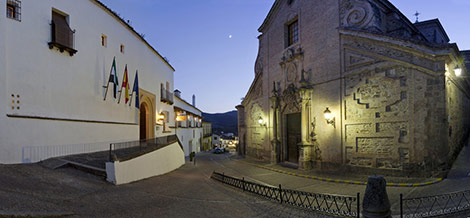
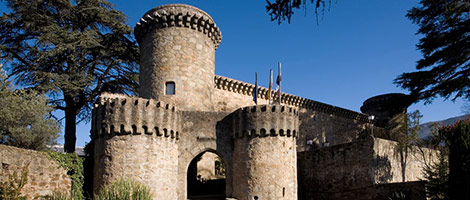
Medieval 15th Century Palace-Castle
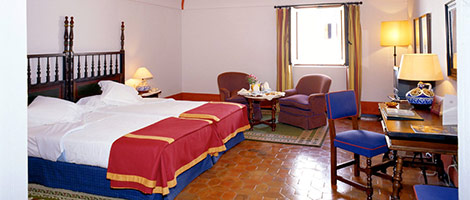

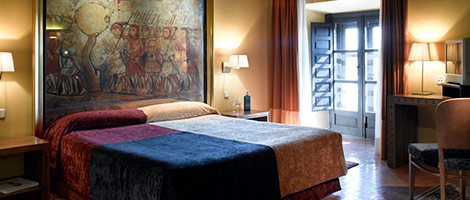
Luxury 4 star star Parador hotel based on a Convent dating back to the 15th Century...
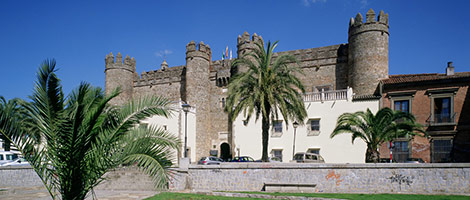
The regional collection is compact enough to compare easily. Start with the kind of experience you want — Roman history, a great old town, a monastery-centered stop or a quieter route through northern Extremadura.
Mérida, Cáceres and Trujillo form the strongest introductory trio: Roman history, a remarkably preserved old city and one of Spain’s great monumental town squares.
Guadalupe is the natural choice when the monastery and the surrounding town are central to the visit rather than simply a stop between larger cities.
Plasencia is the most useful historic base in the north, while Jarandilla de la Vera brings you closer to the valleys and mountain landscapes of La Vera.
Zafra makes a logical final Extremadura stop when continuing toward Seville and western Andalusia, and it gives the trip a distinctly different small-city character.
Driving distances are one of Extremadura’s advantages. These route frameworks can be shortened or expanded without turning the trip into a sequence of long transfers.
The best first introduction to the region, moving from Roman Mérida through Cáceres and Trujillo before reaching the monastery town of Guadalupe.
A greener northern route that combines Plasencia with La Vera before returning toward one of Extremadura’s strongest historic towns.
A straightforward regional spine for travelers crossing Extremadura, with each stop distinct enough to justify moving on rather than repeating the same experience.
A heritage-focused journey that avoids making Mérida essential, useful for travelers who have already seen the Roman sites or prefer smaller historic centers.
Use the interactive map to compare each stop geographically, then open individual Parador pages for nearby properties and room availability.
Paradores Atlas currently lists 7 Paradores in Extremadura, including Mérida, Cáceres, Trujillo, Guadalupe, Plasencia, Jarandilla de la Vera and Zafra.
Mérida, Cáceres and Trujillo are the strongest starting points for a first regional trip because they combine major historic interest with a very logical driving route.
Yes. It is one of the easiest regions in Spain to build around Paradores because many of the strongest stops are separated by practical driving distances and the experiences are varied.
Plasencia and Jarandilla de la Vera are the clearest northern choices, especially for travelers interested in valleys, mountain scenery and smaller towns rather than only the region’s headline monuments.
Spring and autumn are particularly comfortable for sightseeing and self-drive travel. Summers can be very hot, especially around Mérida, Cáceres and the southern part of the region.
Browse curated multi-Parador itineraries or return to the map to see what lies beyond the regional boundary.